
Navigating the UK banking system as an expat can be a challenging task. With unique requirements and regulations compared to countries like the US, securing a bank account may involve supplying references from your home country or establishing residency for a few years. However, each bank may have different criteria.
Setting up a Bank Account
Bank accounts are more difficult to get in the UK than any of my experiences in the US. Even to be added as a joint holder of a long standing account, you’ll need bank references from the US, or wait to have been resident for a few years, but each bank is different.
Cheques and Chequing: Current Accounts
Yes, the British spell it “cheque”. In the UK, what’s known as a “checking account” in the US is referred to as a Current account. UK Banks offer various versions of these accounts to cater to different needs, much like in the US. Upon arrival, it would be beneficial to have bank references and past statements at hand, and to quickly put some utilities in your name or add your name to your spouse’s accounts. Surprisingly, getting store credit cards can sometimes be easier than opening a bank account!
A Current account is crucial for managing your finances. It simplifies bill payments, as all can be handled at your bank or via direct debit auto-pay. Most employers pay through direct deposit (BACS). Each bank branch operates under its own policies, so if one bank gives you trouble, explore your options with others.
Current accounts come with debit cards—Switch/Maestro, Solo, or Visa Delta cards—which are equivalent to US check/debit cards. These are widely accepted at shops, sometimes even offering cashback. These are primarily chip and pin cards, so no signature is required. These days, most cards are Apple Pay and Google Pay compatible.
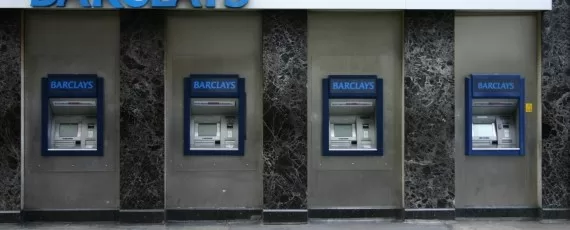
The ATM machines are called “cash machines” or “cash points” and may charge a fee for withdrawals.
UK Bank Types
There are three primary types of banks in the UK: High Street Banks, Building Societies, and Direct Banks. High Street Banks include major banks like Royal Bank of Scotland (RBS), HSBC, NatWest, Citibank, and Barclays. Building Societies like Woolwich, Abbey National (now Santander), and Halifax were established to help individuals save for home purchases. Direct Banks, such as Co-op and First Direct, operate without physical branches but offer telephone and internet banking services, often providing an easier path to opening an account. Some banks, such as Citibank, even offer expatriate services. Safety deposit boxes are also not available at all banks, so if you will require one, ask around.
Writing Cheques
A sample cheque, note the pounds and pence are both written out and ended with “only”. With some cheques, there is no line for the signature, but it still goes there. Any account or other reference numbers are written on the back, or sometimes following the payee name, and generally are not endorsed (signed on back) as was in the US unless made out to “Cash”.
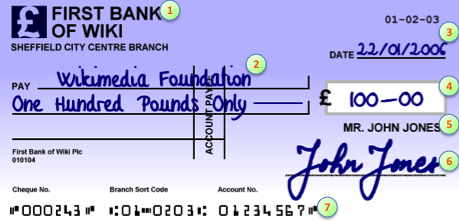
Cheque sample for a fictional bank in the United Kingdom. Created by Sergio Ortega based on real cheque standards. Original file uploaded to Wikipedia as en:File:BritishCheque.png.
Pounds and pence are both written out, finishing with “only” or “exactly”. If you are asked that the cheque be “Crossed Account Payee Only”, most cheques these days are preprinted this way, with vertical lines across the face as shown above. It only means that a cheque can only be paid into the bank account of the Payee and not cashed. The only cheques I’ve seen that are not crossed payee only are government refund cheques.
UK Credit System
Credit is another story, strangely, as they don’t use an equivalent of a Social Security number here to identify who you are, part of the information that they use to evaluate your credit applications is your address. It used to be that, if you’ve just moved into a residence where the last occupant had bad credit, it would affect your ability to acquire credit due to the history of the address. You may be unable to get credit cards at one address, and be suddenly able to within days of moving.
If you have a bank account, and debit card, it isn’t as difficult to obtain store credit cards. The major credit cards, however, are usually gotten through the banks with your Current banking account. If you are denied for whatever reason, the letter that you receive will give you contact iformation for credit reporting agency that contributed to the decision so that you can inquire as to the content of the credit report, as in the US.
If you have credit cards in the US, you may want to ask them about the possiblity of transferring to UK. Your bank will be able to help you with further financing questions, be it mortgage or other loans. Be advised that some independent mortgage brokers and financial advice services are not as independent as they claim.
American Expat Tips for UK Banking
Many expats find it beneficial to maintain a US bank account and use a family member’s address for mailing purposes. Also, international banks and digital banks like Wise (fka TransferWise) are popular among expats and may provide additional conveniences.
Frequent Questions About Money
- Can I deposit a US check in a UK bank account?
Maybe, it depends on the bank.
→ Read More - How do US income taxes compare to UK income tax?
An overview of US vs UK income tax rates compared, shows that families are taxed much lower in the US, while singles are taxed close to the same.
→ Read More


Related Articles

Money Transfers Compared: Best ways to send money to USA or the UK
PayPal, Western Union, Wise and Bank exchange rates compared when sending money abroad.

Low-cost International Calling – Using Skype for Long Distance
Skype can be a useful option for cheap international calls abroad, with an option of of virtual local US number for your stateside family.
Five Things You Need to Know About US Expat Taxes for 2016
Expat taxes bring confusing laws, deductions, credits and qualifying factors, things change from year to year. Here’s your 2016 update.