
Housing in Britain is expensive, not everyone can afford to buy/own their own homes, so there are many rented homes and flats (apartments). Someone on an average full time salary of about £33,000 would only be able to get a mortgage for five times their annual income. If you’ve looked at housing prices, you’ll see the dillema.
The Guardian (2023) reported that people are now renting into their 40’s as it takes almost ten years to save for a mortgage deposit (downpayment). 1 But, there are a lot of regional variations. London is the most expensive place to live by far.
Halifax Bank found 2 that:
- Average house price for first-time buyers up 13%, to £302,010
- First-time buyer average deposit now £62,470, up 8% on 2021
Housing types
Whether you’re buying or renting, there are a few new words to learn where British house types are concerned.
Detached – Not attached to any other homes on any side.
Semi-detached – Attached to another home on one side.
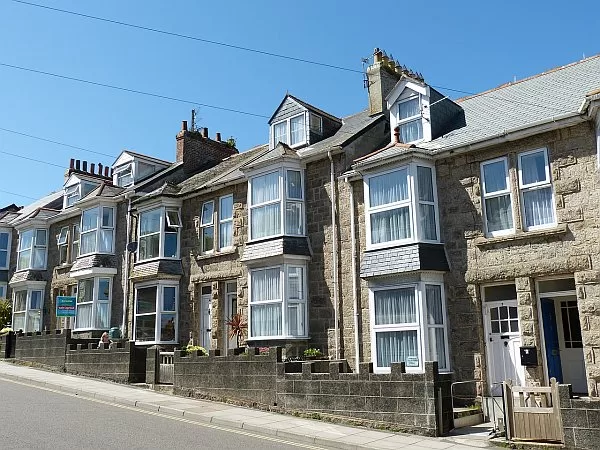
Terraced – Attached on both sides to other houses. (See above image.)
Flats – Apartments
Housing Costs
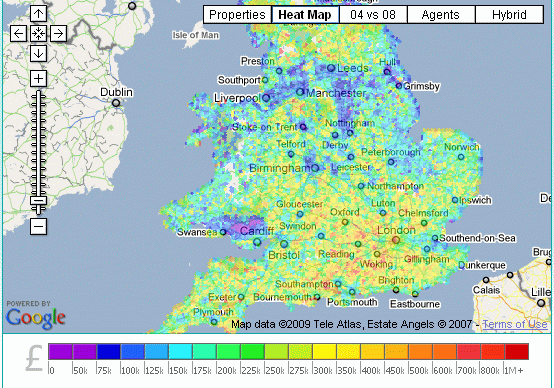
The cost of housing is greatly varied by region and housing type. In the south and especially in built up more urban areas, housing is more expensive, especially in London. The further away from London that you get, the less costly it becomes. (This is also reflected in the salaries/wage. You get paid more in the London area than elsewhere because you need it to live there.)
Some residents never manage to afford to buy a house. If the cost of a home is £200,000, you would need to earn £40,000 per year and have 15% to 20% down to even be close to qualifying for the loan. Generally, the amount of a mortgage you can get is five times your annual income and your expenses are also taken into account to judge affordability.
Renting
Generally, flats and homes are for let (rent) or for sale. The cost of letting a house will not include any utilities or council tax (property tax) and may be furnished or not. Most British word for an apartment. More rentals are arranged and/or managed by estate agents and most are on the web. Search for Lettings and Estate Agents for your area.
Be sure if you are going to be renting your residence, to have some written verifiable references with you, just to make things easier. The deposits are typically one and half times the monthly rent and there will be additional fees from the agents for inventory, credit check and application fees, in the region of £100+ each. Some landlords will accept pets and charge an additional deposit.
Deposits go to a special account, as required by the government so that the deposit can be refunded at the end of the tenancy, minus any damages. If you think you’ll save money by cleaning it yourself, the landlord may get a professional cleaner in and still deduct this from your deposit.
Buying a House
Just as complicated here as it is in the US, you make an offer, arrange to finance, go through getting the house valued, an attorney (A solicitor is a type of lawyer who provides legal advice and representation. More) does all the paperwork for you (for a fee) and a few months later (if you’re lucky), you’re moving in (and paying a mortgage). Many mortgage lenders offer a cash-back option to give you extra cash for your downpayment, but the condition of this is that you are bound to the mortgage for a few years, no re-financing without paying this back.
Shop around for lenders, and be wary of any so-called “independent” financial advisors. The real estate agents have pictures and property information in the shop windows in town, so a person could make a day of walking around the offices to look for properties. Their websites are usually very good, with good descriptions and interior and exterior photos.
Rightmove.co.uk is the go-to for national listings for rentals and buying, with good search tools and notifications of new listings that meet your criteria.
You can find historic property prices by region from the Land Registry website, and other information about neighbourhoods from Up My Street.
Here is a fantastic house price heat map from Estate Angels. Visit them for their interactive search and maps.
In the UK there is a chain system in the property buying process. This means there is a sequence of interconnected property transactions. When a someone sells their property, they are likely to be purchasing another property at the same time. This creates a chain of buyers and sellers, with each transaction depending on the success of the preceding one. The chain can vary in length and complexity, and any issues or delays in one transaction can impact the entire chain. In some real estate listings you may see some say “No Chain”, which reduces delays.
Historic Homes
Older homes can be “listed” on a national register, meaning they have historic significance. Bear in mind that the maintenance on these homes is harder to manage. Grade II listed properties must be repaired in a manner that is in keeping with its period unless special permission is granted. This means you must also apply for permission to modify the exterior in any way, such as adding a TV aerial or satellite dish. Sometimes it’s just not allowed.
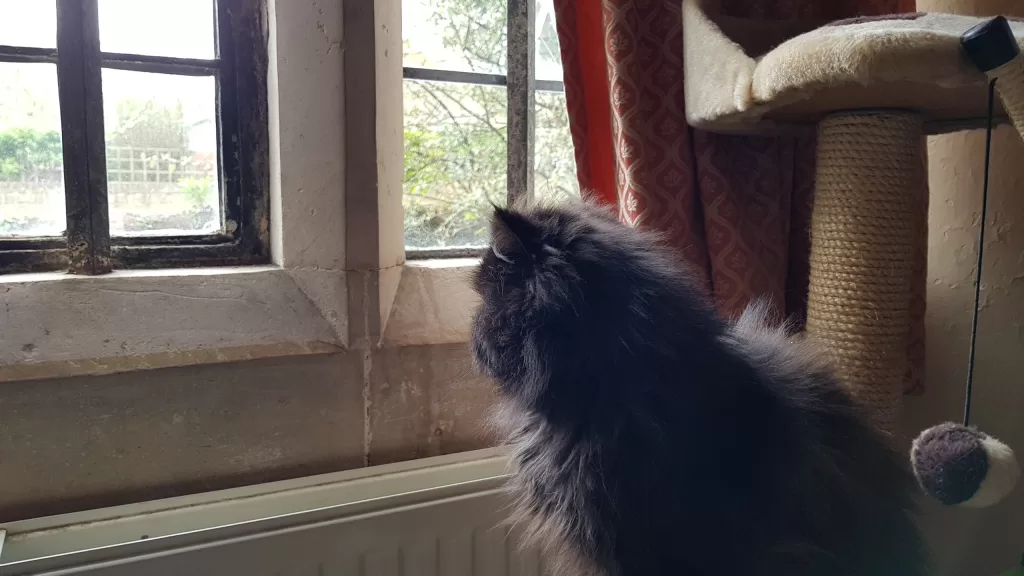
These buildings, while lovely and charming, may have old drafty windows and be expensive to heat. Don’t say you haven’t been warned, but no one will blame you for wanting to live in a quaint old house with leaded windows, stone roof tiles or thatched cottage. If you opt for a more efficient home with insulation and double-glazed windows, you can always spend some time at a local pub with as much atmosphere.
British homes typically have smaller rooms, very little storage space, and no basement or cellar. Keep this in mind when you’re planning what to bring with you. You may not have a single closet in the house and need to buy wardrobes to hang your clothing. Getting a bed with storage underneath is usually a good idea. Shelving, baskets, chests of drawers are always useful.
Hopefully, you’ll have plenty of cupboards in the kitchen. Acquiring or bringing a lot of belongings can make storage a nightmare. You might have some loft space, shed, or a garage, but keep in mind that damp can often ruin what you’re storing in a garage, such as cloth, paper or even more delicate electronics, even just over one winter. I speak from experience.
When buying any type of large furnishings or appliances, take care to measure to make sure it fits through your doors and/or hallways. If it will break down into smaller pieces, you’ll have a easier time of it. Especially if you indulge in an American size fridge, which is getting very popular. Some homes will have a dorm size fridge under the counter which means frequent trips to the shops.
Heating
You will most often find “central heating” to be hot water radiator systems that will operate on a timer, and have thermostatically controlled radiator knobs for the rooms. I’ve not lived in a single home, out of four, in the UK that has a proper thermostat, though they do exist.
Some heating systems are combi-boilers, which both heat the house and the hot water on demand, rather than having a separate hot water heater. Some places may have electric heating. The worst heating systems are the “storage heaters”. These run on electricity when it’s cheapest, at night to heat up, and then emit heat through the day. There are some electricity plans where electricity is cheaper at night than during the day, economy-7 or dual rate. The storage heaters themselves are a nightmare to deal with, in my humble opinion.
You might also find a pre-pay utility system where you must top up before you can use it. These are more likely to be common in a low-income area.
If you are renting, it is a legal requirement for the landlord to perform annual gas appliance checks, for which a certificate should remain with the house.
Radiators
Sometimes your radiators might get air in them, you can usually tell by only the bottom part of the radiator getting hot, which means there is air at the top. There is a valve on the side of the radiator near the top to bleed the air out with. You just need a radiator key, usually brass, which you can find at hardware stores such as B & Q or Wilkinson for about £1.
Turning counter-clockwise will open the valve and you may hear or feel the air coming out. You might want a towel to catch any dribbles when the water reaches the top, then turn the key clockwise again to close it again.
Note that releasing the air from your heating system will also reduce the water pressure in your boiler, so you may need to top it up as well. There is normally a gauge on the boiler to show the pressure, which should be around “1 bar”, it may go up if it’s hot. If it’s too low, your boiler won’t work at all. No heat or hot water if it’s a combi-boiler. If you have problems, consult a native friend, the landlord, or a plumber.
If you’re a homeowner, you might want to subscribe to British Gas boiler service plan which for a fixed monthly cost will insure your boiler for repairs. I had a landlord some years back that used this service and it was quite a good service at that time as the boiler had problems nearly every year.
Bathrooms
For some reason, there are a lot of carpeted bathrooms in the UK. We know what happens to damp carpets. You won’t find standard electric outlets in the bathrooms for safety reasons, so you’ll need to do your hair drying and styling in another room. You may have a shaver outlet, which is reduced voltage.
Sometimes the toilet and bath/sink are in separate rooms, side by side. This may be due to how a building was converted. Or it may be a typical plan, I’m not sure, and I’ve never thought to ask.
Water pressure and toilet flushing can be a nightmare at times, but this must depend on the regional location, it can’t all be as bad as my limited experience, so hopefully, you’ll get lucky. Water hardness varies by region. In some places it is soft, and others it is very hard, with limescale galore.
Otherwise, what else can be said about a bathroom? Oh there is one thing, bathroom sinks most often use separate hot and cold In the UK, faucets are known as taps. Hot water or cold water taps. More instead of the common mixer tap that we get in the USA. So if you have young ones, be careful of them getting burned by the hot water. According to the BBC, the reason for this is:
Water bylaws prevented hot and cold water being mixed because water that had been sitting in a hot water tank in the loft was not deemed safe to drink. 3
Electric Showers
Electric showers are common and nice for boosting water pressure and heating shower water without using the hot water system. You may want to periodically de-scale the shower head for good performance.
You can also get heat lamps for warming the bathroom, great for reducing the chill getting out of the shower.
Garden
The term “yard” is not used, we all have a “garden”, front and/or back. Your front garden may be a small area of concrete or gravel with a few shrubs or small flower beds and a wall to separate it from the footpath (sidewalk). Less often will you find a lawn at the front of the house. You may be lucky enough to have a driveway or even a garage. (Having either of the latter will help keep your insurance premiums lower as the car is safer off of the street.)
Large rear gardens are nice to have for kids and pets, but they do come as a premium, rents and property prices for large garden spaces are higher, sometimes this is worth it if you can afford it. If you can’t afford it now, it’s certainly something one can to aspire to. It’s normal for people to move (up the property ladder) every few years as their needs and income change.

Most consumers tend to use electric mowers for the smaller gardens if they have a lawn. Some rear gardens are laid with decorative gravel for low maintenance. It’s nice to have a place with tidy and mature gardens.
For container planting, they sell bags of compost, which tends to dry out very quickly. For the longest time I couldn’t find anything resembling standard American potting soil, but recently the Miracle-Gro company has started selling bags of higher quality planting soil/compost mixes here.
Your garden hose is now a “hose-pipe” and the fittings are different, instead of standard screw connectors, there are valves that snap together. It is convenient but the plastic ones are susceptible to winter damage and have to be replaced every year or two.
References for Housing in the UK
1. First-time homebuyers now need nearly 10 years to save a deposit, research finds. (2023). Retrieved 5 July 2023, from https://www.theguardian.com/money/2023/jul/03/first-time-homebuyers-now-need-nearly-10-years-to-save-a-deposit-research-finds
2. Loyd’s Banking Group (2023). Cohabitation nation – more than six in 10 first-time buyers go joint to get on housing ladder. Retrieved 5 July 2023, from https://www.lloydsbankinggroup.com/media/press-releases/2023/halifax-2023/more-than-six-in-10-first-time-buyers-go-joint-to-get-on-housing-ladder.html
3. Why do homes in the UK have separate hot and cold taps?. (2023). Retrieved 6 July 2023, from https://www.bbc.com/news/uk-england-42948046


Related Articles
No Results Found
The page you requested could not be found. Try refining your search, or use the navigation above to locate the post.